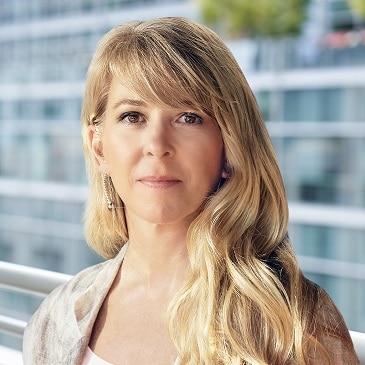
LIZ ANN SONDERS: I'm Liz Ann Sonders.
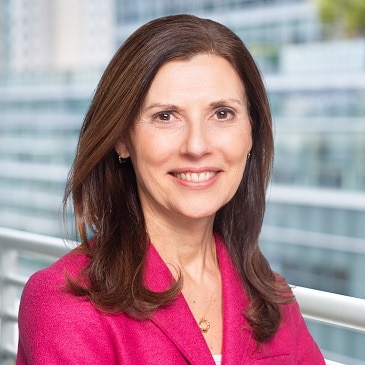
KATHY JONES: And I'm Kathy Jones.
LIZ ANN : And this is On Investing, an original podcast from Charles Schwab. Every week we analyze what's happening in the markets and discuss how it might affect your investments.
Well, hi, Kathy. Lots of eventful weeks, but I hope your Thanksgiving went well.
KATHY: It did, it was very nice, a little quiet, but that's OK. I'll take quiet.
LIZ ANN: Quiet is good. We'll take that. So, you know, lots of chatter in the past few days about who will replace Jerome Powell as Fed chair? His term is up in May of next year. And President Trump has said he's already made a decision. And the speculation at this point, as we're recording this, is that the choice is White House economic adviser Kevin Hassett. If that's what happens, what do you think the implications are for the Fed, Hassett in the role. Talk about the dynamics, maybe not just at the point he would take over, but the period between now and then.
KATHY: I think there's an issue here that most people in the markets are aware of and that is whomever is chosen by President Trump and the administration, whoever is put forward, he's already said he wants that person to advocate for cutting interest rates. So that brings into question anyone who would be appointed, whether they're highly qualified or less qualified becomes a moot point because if the sole purpose of their nomination or the sole reason that they've been nominated is that they want lower interest rates, that can actually backfire in the marketplace because A, the market could question their independence and we've gone down that road a couple of times this year and that is troublesome for the bond market, for the Treasury market.
But it also means that you could backfire in terms of what happens with the yield curve. So if the Fed is seen cutting interest rates when the inflation issue is still prevalent, is still a concern, simply because the administration advocates that, then what probably will happen is long-term rates will go up as short-term rates go down. That's called a steeper yield curve.
And that is counter to what the administration really wants to accomplish. What they have said, what Treasury Secretary Bessent has said is that they're aiming for a lower 10-year yield because that's linked to mortgage rates. And that would be the best thing for the economy, is to get the housing market back on its feet. So I think the issue is not who the individual is, but the way in which the individual is presented to the market.
And right now what we're hearing is the president saying, "Well, I want this person because I want interest rates to go down." That is not probably a great way to present whoever is nominated. Now, Kevin Hassett is believed to be the nominee. I think most people believe that he's qualified. But you can sort of handicap somebody if you put in a person with express desire for them to take a certain action.
LIZ ANN: Do you think specific chatter about it being Hassett was some sort of trial balloon to see how the market would react? Or am I being cynical or….?
KATHY: You know, I don't know. I think that's been teased so many times that, "Oh, we have a candidate," or "We're looking at 10 candidates," or "We narrowed it down from 10 to one, but I'm not going to announce it until January." I don't really know what the PR strategy is here. Maybe just why make this announcement ahead of the next meeting? Why not wait and see the outcome of that and then make the nomination? And the news cycle will be better in January because people won't be on vacation or absent. So I'm not really sure what the strategy is, but I do worry that it could backfire for the nominee.
But, Liz Ann, we do have a Fed meeting coming up on the 10th. So let me toss it back to you. The market seems to think we're going to get a rate cut. What do you think the stock market will do with that information?
LIZ ANN: Yeah, so I think you're right. I mean, the market-based odds are close to 90%. The Fed doesn't tend to go against market odds when they're that extreme in one direction or another. But it wouldn't surprise me if the commentary around a cut was somewhat similar to what happened at the October FOMC meeting when Powell was pretty quick to shoot down the notion that we could just continue to anticipate cuts at every meeting and that, you know, I think he said, "not a done deal." It may look like it is a done deal now, but it wouldn't surprise me if the language was similar and not promising anything thereafter and reinforcing the data dependency associated with their decisions.
And I want your thoughts on this, too. I think it may be more interesting, not just for this upcoming meeting, but at subsequent meetings is how much divergence of opinion there is. Are there multiple dissents like in the case in the October meeting where you had a dissent in favor of a bigger cut, but you also had a dissent in favor of an actual hike? And we've certainly seen that in the so-called dots plots, which is every member's prediction of where the Fed funds rate is going to be over the next couple of years. And it could continue to manifest itself in some dissents and not just unidirectional dissents, but, you know in both directions. So what are your thoughts on that? Do you think that that is kind of part of the fabric of the Fed over the next at least several meetings?
KATHY: Yeah, I think you've hit on something that the market's going to have to get used to because we've had such a long stretch where consensus building was kind of the watchword at the Fed. And now we're seeing, you know, many, many members, 17, 18, 19 members, depending on who's in and who's out with many different opinions. So the dot plot is going to be really interesting because you probably see this dispersion of expectations about the direction and the magnitude of rate changes is extremely wide. So I think that that continues and what follows from that would be dissent. It's hard to put a dot down that says the Fed funds rate should stay above 4% and then vote in favor of a rate cut that sends it a lot lower. And vice versa, right?
If no change is made, and your dot is at 3%, then it's going to look a little strange that you didn't dissent. So yeah, I think we're probably in a new era where dissension is more of a common thing. And partly that reflects the complexity of policy setting in this environment. We have still stubbornly high inflation. We have factors that are contributing to some degree to that expectation going forward while the labor market is softening. That puts the Fed in this very tight position where both of their mandates are in tension, and they have to try to balance that. And that's a delicate balance, particularly when we still lack a lot of good data. We're catching up, but we're not going to have good data on the labor market for quite a while. So yeah, it's going to be a complicated outlook and I think that that's going to be reflected in what the Fed has to say.
LIZ ANN: I also think, you know, a greater amount of voicing of independent opinions, I suppose you could see as good as a backdrop in light of ongoing and maybe recently slightly elevated again, concerns about any overt threats, direct threats to the independence of the Federal Reserve and how much sort of power any one voice, including the chair, can have in affecting monetary policy decisions. And so I think as a backdrop, that maybe helps to alleviate what I think are very valid concerns about threats to the independence of the world's most powerful central bank.
KATHY: Yeah, and you know, speaking of central banks, one point I would make right now is the Fed's also in line with many central banks in terms of leaning towards easing policy, although I'm not sure we'll get a lot more rate cuts from Europe in the near term. But leaning against that is the Japanese bond market. And what we're seeing there is those yields are going up. And this kind of a long story behind what's driving that, they're lifting the kind of hold that they've had on long-term rates and allowing for those yields to rise after decades of holding them down. And that's helping to push, I think, global yields up at the long end of the curve. So it's really a difficult environment for one of the major central banks to go one direction, the Fed to go another direction, and the rest are kind of in the middle.
It's going to complicate things because the government bonds are a global market and we are very much affected by what happens in the rest of the world because about half of US Treasuries are owned by foreign entities and that puts us right in the crosshairs. So when the Fed is considering their actions, they have to take into account what happens elsewhere because that affects the dollar, and it affects our bond yields.
So, a more complex environment for the Fed than I think in previous cycles. That's going to be interesting to see how they manage that. But I do want to get your take a little bit on what's going on in the stock market. We've had some, you know, we had some real risk-off days and then kind of settled down. What's your take on what's driving things?
LIZ ANN: I think we're starting to see a greater amount of dispersion within the equity market that we're sort of moving away from some of these monolithic moves, narrative-driven moves, that tend to lift certain baskets or subsets of stocks altogether. And not to pick exclusively on the Magnificent Seven, but I'm going to. In fact we all have our outlooks coming out for 2026. And one of the themes in ours is that I think there's going to be a decreasing focus on cohorts like the Mag 7 in part because it's actually the case that only two of the seven stocks are now outperforming the S&P 500 on a year-to-date basis. It's only Alphabet and Nvidia. And Nvidia is not the best performer among the Mag 7. So Alphabet leapfrogged Nvidia, but there's a fuller story and maybe a more interesting story continues to be told under the surface of these cap-weighted indexes and one of the ways I have been highlighting that that seems to sort of resonate with clients. I just did a client event yesterday and I talked about what I'm about to mention and I had quite a few people come up and say "I didn't know that," or "Boy, that's a different way of thinking about it."
And it has to do with, I think, the conflating that happens at times in investors' minds of price performance and contribution to index returns. And especially when you have such a vocal narrative around the Mag 7 and the so-called AI trade, and it turns into monolithic thinking and an assumption that these are the best-performing stocks and they're all doing well. So I'll pick on an Nvidia, and as a reminder and a disclosure of sorts, we don't cover individual stocks. I'm not an analyst, but in this day and age, you can't talk about the market and what's going on in the world of AI without mentioning names. It's just impossible. You can't be generic about it. So Nvidia is still the number one contributor to S&P 500 index gains this year. But it's ranked 74th in terms of price performance. Alphabet is performing better than it but you know, the number one contributor has 73 stocks within the same index performing better than it is on a price performance. It's the largest contributor by virtue of the multiplier of its cap size.
And maybe it's important to remind investors that that multiplier effect works in the opposite direction. So at Apple's low, intra-year low this year, I don't remember what it was down on a year-to-date basis at that point. It wasn't an implosion by any means. It wasn't near the bottom in terms of worst performing stocks. But by virtue of the multiplier of its cap size, it was ranked 500th in terms of contribution.
And the reason why this is important to individual investors, which of course is our audience, is that they're not benchmarked to the S&P 500 on a quarterly basis like a fund manager might be, that is at the mercy of the construction of the indexes and how dominant these stocks are in the index. And they really put themselves at a disadvantage if they're not matching weights to some degree. But that's an institutional problem. That's not an individual investor problem.
The point is that there are other opportunities to do well in the market. There's been interesting moves recently in equal-weight relative to cap-weight, which I think could have legs, not in a linear fashion, not every week, every month, we're going to see equal weight outperform cap weight. But I think we could have more fits and starts of outperformance by equal weight. We've had fits of outperformance by the Russell 2000 index of small cap stocks. I think we could continue to see that.
So I think that there's the churn and rotation under the surface in the market tells a fuller story, but it also means that there's opportunity presenting itself. The tech sector has been the best performer on a monthly basis, five out of the six months up until last month. And it literally plunged to second to last for the month of November.
So I still think we're going to see a lot of sector jumping in terms of week-to-week, and month-to-month leadership, but I think there's an opportunity to look for attractive areas and ideas that go outside of some of those narrative-driven, small monolithic pockets of the market.
So that's a to some degree a little bit of a preview of what's going to be in our in our outlook. But I think that kind of changing backdrop of more dispersion, less correlation, and in turn providing actually a platform for stock pickers, an ability for active managers to operate maybe a little bit more easily on the playing field with passive managers. So that's just a little bit of a preview of one of the themes in our outlook. How about you?
KATHY: Yeah, well, I'll just comment on that as a spectator slash tourist in the equity market. I would enjoy that because frankly, it gets a little old talking about the same handful of stocks all the time, every day, all day. So it would be kind of nice to have people highlight some other things going on in the market for a change.
On our outlook, we're kind of taking a middle road, and this is something we've been doing all year. It isn't just sort of a cop out because we have no clue what's going on. Although there is an element of, pick your own adventure here.
LIZ ANN: Let's be honest. None of us in this business know what's going to happen.
KATHY: Right, true. Yeah.
LIZ ANN: So, you know, the answer to "What do you think is going to happen?" is always, "I don't know." And then we expound on that, but...
KATHY: Right. Yeah, I think this environment is more complicated or more difficult because the policy making is really rapidly shifting all the time. And then when you have a data vacuum on top of it, we base sort of our expectations for what's going to happen on the data and then we get a big, long period of no data. That makes it even more complicated. But there is another reason though, and that is because playing it sort of down the middle this year, 2025, has actually turned out to be really good.
If you had a diversified portfolio with intermediate term duration and high credit quality, you've done great in fixed income compared to some years and compared sometimes to equities. So the ag intermediate term ag is up over 7%, between 7 and 8% this year, with low volatility. And that's just having a diversified portfolio with high credit quality and not shooting for long duration or all cash or whatever has been a really good strategy for most people. It is what the bond market's kind of designed to do.
And for the time being, we do think there will be a bias for the Fed to ease policy. So that's in our outlook. But perhaps not as much or as rapidly as the market is expecting and also, as I mentioned earlier, we're not sure that long-term yields have much room to come down unless we see real progress on inflation and with inflation stuck near 3%, frankly a 10-year Treasury yield at 4% to 4.25% is about right, is about where it should be. So we do see some tactical opportunities in various sub-asset classes, but really just kind of sticking to the core is still our theme and not trying to shoot the lights out with big risk in this environment. So bond people are boring, once again, I would say that. That's where we come down.
LIZ ANN: I wish I could say the same thing about equity people, but that's just not the world in which we live these days.
KATHY: Well, you get all the attention, but then you also get all of the questions, right?
So I did want to, though, ask you what you're looking for the week ahead besides the Fed meeting. What should we be paying attention to?
LIZ ANN: So we do get some data out in the next week or so. In fact, the day after we're recording this, we get Challenger job cut announcements and that seems to be a little bit more on folks' radar for, I suppose, obvious reasons. We get weekly claims and I think what you want to pay attention to these days in unemployment claims is the interesting differential between what has been initial unemployment claims, which continue to be fairly low and continuing claims, which means people have already filed that continue to stay on unemployment insurance because they haven't found a job. Initial claims continue to be low. Continuing claims are at a cycle high.
So that is another reflection of not just the sort K-shaped nature of this cycle, but also this idea that it's a low-hiring, low-firing kind of backdrop to see how long that persists. We get the Personal Consumption Expenditures Price Index, the PCE, which is the Fed's preferred measure relative to other metrics like Consumer Price Index. We get the Job Opening and Labor Turnover Survey, which we were not getting during the government shutdown. And that provides a reading on job openings and the quits rate and the layoffs rate.
Now, that one important note in advance of any release of JOLTS data, is it lags all other labor market data by a month but given that we're not getting an October jobs report any of these data reports, I think could be beneficial. Obviously we have the FOMC meeting. We already talked about that. So that's what's on my radar. How about you?
KATHY: Yeah, I think it's mostly about the Fed meeting and then the comments afterwards. So we're in the quiet period leading up to the meeting, which means nobody's talking until we get the results. And then I think the market's going to be really focused on not just the decision, but the projections going forward. What is the terminal rate? How low does the Fed see itself going in terms of interest rates?
And then the commentary about why the various members see things differently. So you'll have some who are projecting lower inflation due to productivity gains. And they'll mention AI and other things and say, "Well, that will hold inflation down, even though growth will be good. And therefore, real interest rates can come down a bit." Others will have a totally different view on that and say, "No, we don't have inflation under control. It's premature to start cutting rates, and we're probably not going to go that low." So I think the nuances or the explanations for why people vote the way they do and what their projections are longer term will be a pretty important driver for the bond market. And again, for the slope of the yield curve, that's really important because you can get short-term rates to do whatever you want to do if you're the Fed.
But, really harder to manage long-term interest rates unless they bring the balance sheet back into play, which I think the Fed is trying hard not to do. But at some point, people always ask me, "Well, what's the exit strategy for all this debt? How does the US and other major developed countries work their way out?" Well, historically, there's a couple of routes. You can try to outgrow your rising debt by growing faster than the debt grows. That's the optimal way. That's hard to do, but it's the way most countries try to manage. And then another alternative is to employ the central bank to hold down, explicitly to hold down interest rates at the long end of the curve, which is what Japan did for years for a variety of reasons.
And that's, you know, it's doable, but it's not necessarily an optimal solution and that produces much different outcome in the market. So I think those are the things that we're watching for. I don't know how much information we get on that sort of long-term view, but that's what I'm hoping to hear from various Fed officials.
LIZ ANN: Well, that's it for us this week. We've mentioned, both of us have mentioned our 2026 outlooks. Kathy, your team, you and your teams, I think comes out this week and probably will be posted by the time this episode drops. My team's outlook will post on December 8th. So shortly after this, let's keep an eye out for those. And in terms of this episode, thanks as always for listening.
As a reminder you can also keep up with us in real time on social media, I'm @LizAnnSonders on X and LinkedIn. Make sure you're following the actual me, still have lots of imposters.
KATHY: And I'm @KathyJones on X and LinkedIn, and that's Kathy with a K. And you can always read all of our written reports, including lots of charts and graphs at Schwab.com slash learn. And if you enjoyed the show, we'd be really grateful if you'd leave us a review on Apple Podcasts, a rating on Spotify, or feedback wherever you listen. And please tell a friend about the show. We'll be back with a new episode next week.
LIZ ANN: For important disclosures, see the show notes or visit schwab.com/OnInvesting, where you can also find the transcript.