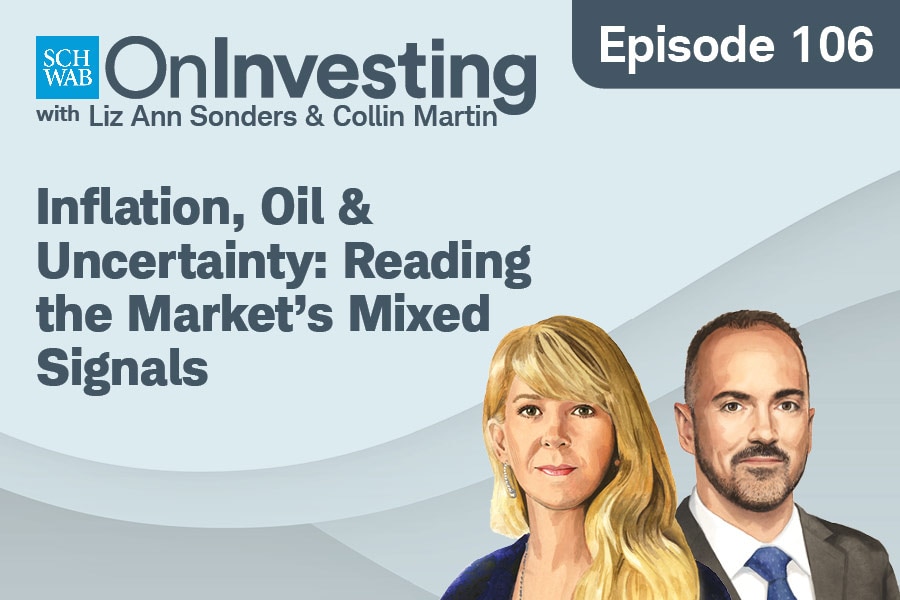
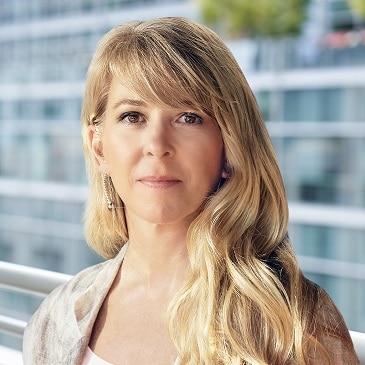
COLLIN MARTIN: I'm Collin Martin
LIZ ANN SONDERS: And I'm Liz Ann Sonders.
COLLIN: And this is On Investing, an original podcast from Charles Schwab. Every week we analyze what's happening in the markets and discuss how it might affect your investments.
LIZ ANN: Well, for two years, we would start this by either me saying, "Well, hi, Kathy," or Kathy saying, "Well, hi, Liz Ann." But this time, I get to say for the first time officially, "Well, hi, Collin." So welcome to the first of many of these weekly conversations we are going to have together.
COLLIN: Hi, Liz Ann. Thank you so much. I'm really, really looking forward to the opportunity. I've been an avid listener for the last two years. I think you and Kathy have done a great job of breaking down the markets. And my hope is to keep that tradition going and keep these easy conversations going. And I look forward to what the next handful of weeks and multiple weeks, where they're going to lead us.
LIZ ANN: Yeah, I'm excited, too. And because people listen to us and they don't watch us, even though you and I can see each other on camera now, I'm often asked about how far in advance do we do our write-ups and do we go off of a script? And the answer is "no." Other than maybe introducing an external guest and we'll read a bio, but it's great to have you because, very much like Kathy and me, we're not script people. And this literally is our listeners getting to sit in on a conversation that we would have if the microphones weren't on and cameras were not rolling. So, I am looking forward to it. And certainly, Collin, as you know, and hopefully our listeners, other than maybe some brand new listeners know, our show is unique because we cover both the equity side of things and the fixed income side of things.
So Collin, I want to give you an opportunity to just chat a little bit about how you are thinking about these areas in the context of this podcast that we are doing, including Fed and currencies, not just the bond market. So how do you see your beat as maybe similar to Kathy's or maybe a little bit different at times?
COLLIN: Yeah, it's probably a little bit of both. But so for some background, I think that will help, because I've joined the program a little bit, but with Kathy's retirement, I'm now heading our fixed income research and strategy team here at Schwab. And in terms of the beat, I'm going to cover, and our team covers all the things that Kathy has discussed here in the past. We talk about the Federal Reserve. We talk about the direction of interest rates, where we see Treasuries going. We talk about the dollar. But then we also talk about all the other areas of the bond market. The bond market is really large, really complex. I know it can be really difficult for a lot of investors to understand because it's not just the Fed or Treasuries. There's a corporate bond market. There's a municipal bond market mortgage-backed securities, global bonds. There's so many out there and I tend to come, and I know Kathy did as well, but I love the educational aspect of it, because Liz Ann, you and I can talk about this all the time, but if an investor doesn't really understand the market I'm talking about, it's going to be hard for them to take my guidance or follow our guidance. So lot of what I want to do is educational.
And then my background, and I cover everything, but my focus over the years has been on the taxable credit markets. So corporate bonds, preferred securities. So you may hear me talking about things like that, maybe a little bit more than Kathy has, but like Kathy, I plan on kind of touching the wide range of investments that fall in the fixed-income universe.
So enough about my background here. Let's get into it, Liz Ann. There's clearly a lot going on right now in the markets and the world. And I think the big question of the last few weeks is everything that's happening in Iran and the impact it's had on the market. So how about you give us an overview of where things stand right now?
LIZ ANN: Yeah, it's been a wild few weeks, obviously. You know, one of the things that I hear from clients quite regularly is around how, and I'll put sort of air quotes, resilient the market has been in the face of obviously pretty dour news. It seems to get more dour on a day-to-day basis around the war. And the market has, at the index level, been fairly resilient, although as we're taping this, we've had a couple of fairly ugly days, given escalations that are happening in the war and damage done to a couple of really important energy outposts, particularly natural gas.
I'm not going to do a lay of the land with the war right now because it changes intraday. And so there's the time between you and I having this conversation now when this episode drops, a lot can happen. But you know, specific to the resilience by the market, and the reason why I made the comment about it being in air quotes is that that is accurate at the index level. But I think really where the action has been much more significant and maybe reflecting what's going on in the instability and uncertainty with regard to the war is below the surface of the indexes.
This is a facet of the market's behavior this year that we have been writing about and I've been speaking about for quite some time. I put data on my Twitter feed every morning associated with this, and it has to do with index-level change and tight trading range at the index level, but much more turmoil and rotation and churn under the surface.
And to put some numbers on that, updated numbers at least as we're taping this, the S&P has had no more at this stage, as we're taping this, no more than a 5% maximum drawdown, year-to-date. So that's the worst decline for peak-to-trough that we've seen year-to-date, but under the surface, there's been much more turmoil. So the average member within that index, within the S&P 500®, has had a 16% maximum drawdown, year-to-date. And it's more stark for the NASDAQ. NASDAQ's had a little bit more of an index-level drawdown of 7% at its worst, year-to-date, but the average member has now had a -30% drawdown just year-to-date . So that's where you're seeing a lot more of the action, is under the surface.
You've had these unbelievably sharp rotations and it literally… things can turn on a dime, driven by, even before the war, concerns about AI, the disruption part of AI. And we saw, you know, a huge dislocation happening in the software-as-a-service or SaaS stocks. They've since had an interesting rebound as, as I think a lot of the, what I like to call the short-attention-span money that is just flying around in the market, not just by retail traders, but institutions like commodity trading advisors, CTAs for short, some of the systematic hedge fund community, the long/short hedge fund community. And you just get these rapid-fire shifts and rotations that happen sometimes because there's a quick change in a narrative.
More recently, of course, a lot of those narrative changes are around the war and "Are we going to see an escalation from here?" We've also seen a very, very strong inverse correlation develop on an intraday basis between oil prices and the S&P 500. And I think that backdrop is not likely to change unless we find ourselves with some sort of resolution or end to this conflict.
But I'm going to toss it back to you because there's also a lot of interesting things going on as it relates to energy prices, the impact that that has had on inflation and inflation expectations and some interesting moves across the maturity spectrum in yield. So I'm going to toss it back to you and ask you how you're thinking about what's going on in the fixed income market in light of what's happening with the war.
COLLIN: It's a great transition. I'll build on what you were talking about in terms of… you mentioned the correlation with stocks and the price of oil. We're seeing the price of oil be a key driver in the bond markets as well, especially with long-term Treasury yields like the 10 year Treasury, for example. And what we've seen, basically since the conflict began, is Treasury yields have risen. And I wouldn't say that is counterintuitive, but there's an angle that it might be because when there's uncertainty and when investors get a little bit nervous, especially as you mentioned, if stocks are declining a little bit, sometimes you see this flight to safety where investors might shift towards the perceived safety of U.S. Treasuries. And when that happens, you might see yields fall and their prices rise because bond yields and prices move in opposite directions. That hasn't happened. We've seen most Treasury yields rise since this happened, mainly due to inflation and inflation expectations.
If inflation is expected to rise, if you're a fixed-income investor, you want to see higher yields to combat that inflation risk because you're locking in a fixed rate when you invest in a bond. So you want to make sure you're being compensated accordingly. So it looks like so far, inflation and inflation expectations are that key driver. That probably caught some investors off guard.
Not that I want to compare it to the 2022 experience, but it's never a good experience when yields are rising, because the value of your holdings tend to decline. And if we go back to the end of February, 10-year Treasury yield had been slowly declining and it went below 4%. Now it's close to 4.3% on Thursday as we're recording. So we've seen the value of lot of these holdings decline a little bit. It's not just inflation expectations, though, Liz Ann, it's shifting Fed expectations as well about what the Fed might do going forward because those play a role.
Now, something I am concerned about over the longer run is how long does this conflict go on? And at some point, do we see a shift from, "Hey, let's just focus on inflation," to "I'm actually worried about the negative consequences to the economy, to other risk assets." And then do we see that flip and do we see long-term Treasury yields decline? We don't know right now. Very uncertain. So time will tell.
Let me send it back to you because I mentioned Fed expectations and then we got a very… I'd say a consequential meeting yesterday where we were hoping for some clarity about what's going on, maybe what the outlook looks like over the course of the year. So what was your take on the Fed decision?
LIZ ANN: Yeah, well, you know, didn't surprise probably anybody that's been paying attention that the Fed did not do anything with interest rates. There was some assumption that maybe you would have more than what was to be one expected dissent, which is Stephen Miran, who dissented in favor of cutting interest rates. That's been his M.O. since he joined the team over there.
But there were no other dissents. And what's also… happens when you have a March Fed meeting, it happens in March, in June, in September, and December, is you get an update to the summary of economic projections and the so-called dots plot. And our friend Claudia Sahm, who we've had on this podcast a couple of times, who's fantastic, made a comment on Twitter yesterday, or X, I guess, I still have trouble remembering to call it X, about, you know, this was a time they should have just gotten rid of summary of economic projections, given the obvious uncertainty with regard to the war. So there was not a lot of focus on those, and there often is more focus on the dots plot, but, it's impossible to have an assessment of what the war is going to do.
To your point, Collin, the impact it is going to have most likely on not just inflation, but on growth. These days, what generally tends to be more interesting is the press conference. Now I was surprised that it took a few questions before one came from a reporter to Jerome Powell about what his plans are, come May 15 when his term as chair ends.
Maybe because in his formal statement, he sort of addressed it up front. And he did say he would stay on, until we'll assume Kevin Warsh is confirmed. But there's no date for that yet because Senator Tillis has said he's holding up the confirmation hearings until the Department of Justice sort of winds down the investigation of Powell. Now, the department has already come out and said, there's no validity to this, but there's now an appeals process. For what it's worth, from a timing perspective, the appeals process for Lisa Cook when she went through her legal trouble took, I think, 22 days. So we still could have this resolved such that Warsh is confirmed, he comes in. Then the question is, does Powell opt to stay on as governor? And he would not give an answer to that.
So as usual, I found the press conference to be a bit more interesting. So what were your takeaways, Collin, as you heard the news, read the statement, listened to Powell's opening remarks, and then during the oh-so-interesting press conference?
COLLIN: Let me stick first with Powell's potential transition. I found it funny that he had his response ready." Here's what my plan is." And he made it clear that he will stay on as chair pro tempore if Kevin Warsh isn't approved, confirmed on time. I'm going to get a little inside baseball here because there's a lot of moving parts. I find sometimes there could be some confusion about who all the players are and what you know what seats are available.
So for Powell, he's currently the chair of the board of governors, and then that almost always is the chair of the Federal Open Market Committee. His term as the chair of the board of governors ends in May, in two months, but his term as a governor itself, not the chair, doesn't end until 2028. So when we talk about Powell's term ending or potentially retiring, the only thing that's explicit coming up is the chair of the board of governors. As you mentioned, he can choose to stay on as a governor. Historically, when we've seen a situation like this and the term as chair was over, the chair had retired prior to the end of the term, but we don't know what Powell will do. He might stay on, and to use his words, to kind of do what's in the best interest of the institution itself.
Now on that, if he chooses to leave, the seat that Kevin Warsh is taking, or would take, is not Powell's. The seat or the governor seat that Warsh will be taking is Stephen Miran's, who took over as a governor last fall and he's been staying on. His term expired in January, but because there hasn't been a replacement yet, he's been staying on. I think this is important because given the current makeup, if Warsh is just replacing Stephen Miran, who's arguably the most dovish committee member and is pushing for lower rates, the math for our outlook doesn't change much. It's just one potential dove, if that's the direction that Warsh wants to go in, replacing another dove.
So you have to remember that he'll have one vote of 12. It's a committee of 19. Not everybody votes. And his challenge will be to build a consensus. And I think that's going to be very difficult given the projections that we got this week. Just a quick little wrap up of a few takeaways I had from the meeting itself. Number one is uncertainty. Powell kind of addressed this. You mentioned what Claudia Sahm said. Powell said if there was a meeting to skip the summary of economic projections, this would probably be it. And he kind of even said at one point, "we just don't know."
So take all those projections with a grain of salt. A takeaway I had… and when you look at the summary of economic projections, we saw an upward revision to growth over the next two to three years, relative to the projections that we got in December. And I think those are probably stale. I think those were the pre-war projections, but that shows that the committee thought the economy was on pretty solid footing heading into this. So I think that's a good takeaway. But again, take everything with a grain of salt because there is so much uncertainty.
And then finally on the dots or the dot plots, 7 committee members projected no rate cuts through the end of this year. And then another 7 projected just one. So you had 14 of the 19 dots projecting one cut or less. If anything, that just suggests they'll take a patient approach going forward, see how this all plays out and, you know, see how long the conflict goes on, see what it does to inflation expectations, but for the time being, it doesn't seem like they're in a rush to do anything.
LIZ ANN: Yeah, and one other thing I wanted to mention before we get to another segment that is always in our podcast episodes here, too, is I was just looking at one of the ways you can judge probabilities based on market pricing of what the Fed is going to do. And just this morning, we were up at about a 9% probability that at the April meeting, the Fed would hike rates and that was 0% yesterday. So it's a moving target, that kind of data changes literally every hour with every release of economic data points.
It's now time that we do this every week, where in our episodes I… well used to turn to Kathy, now I turn to you and say, "What's on your radar for the next week?" Whether it's economic data coming out? What are you keeping a most close eye on, maybe beyond the obvious, everything going on with the war?
COLLIN: Yeah, so this is clearly a very Fed heavy discussion, but I'm going to keep that theme going. So now that we had the FOMC meeting this week, the blackout period is over. So leading up to each meeting, committee members are not allowed to give speeches or interviews about monetary policy. Now they can go out and talk about their views. Because so far, what we've seen is, you know, we've seen the projections, but we see ranges and we see medians, but we don't get an idea of how each individual committee member is thinking. So there's going to be no shortage of speakers over the next week or so, kind of discussing what their view is and how they are thinking about the current war, how it's changed their outlook.
And then more importantly, you what are they looking at that that will or won't shift their view? So I'm going to be paying very, very close attention to the Fed speakers because I think Powell does a good job of saying "Here's what the committee is thinking in aggregate." We'll be able to get a little bit more granular at the individual level.
I'll also be looking at, this is a little bit wonky, Liz Ann, but every quarter we get something from the Federal Reserve, it's their Z1 report, or the financial accounts of the United States. It's actually coming out Thursday, March 19, but it's after we're recording here. And it gives us a very big-picture look at the economy, at households, individuals, it looks at kind of… you can get an aggregate balance sheet, assets, liabilities. One thing I focus on though, and I mentioned before that one of my areas of focus is the corporate bond markets. I can kind of see how the health of the corporations are, non-financial corporations. I can see, are we seeing an increase in liabilities relative to their assets. I can see what their aggregate cash holdings look like, what their liquidity looks like. Now there's a bit of a lag. This will be from the 4th quarter, but it's something I look at because the bond market and corporate bond market, it's not just the S&P 500. There's a lot of corporate issuers out there.
So I'm going to be focusing on that to see have fundamentals improved, have they weakened a little bit? And then what does that mean for potential corporate bond investors? Is it safer to invest now? Do we see risks on the horizon? So that's something I'm going to be focusing on. How about you, Liz Ann? What do you think investors should be paying attention to over the next week?
LIZ ANN: Yeah, I agree. Fed speakers, I've often jokingly said the FOMC, maybe it should stand for "Federal Open Mouth Committee." And I don't mean that in a disparaging way. I actually think it's great to have more speakers out there and more transparency in terms of what views are. But aside from that, we do get the leading economic index out of the conference board. I haven't focused on that as much in the last couple of years. It's not done a great job of providing a leading sense of what the economy is going to do because it's very manufactured-weighted, not services-weighted.
But sometimes there's interesting tidbits you can pull out of that. And 3 of the 10 indicators that make up that overall index are financial-market indicators. We'll start to see whether some of the tightening in financial conditions as a result of everything happening with the war and the impact it's having on the market, see how that shows up in there. We also get some housing data with the Fed unlikely to be in easing mode anytime soon, and the move up as you have talked about in yields given inflation risk, I think keeping an eye on the housing data is important.
We also get productivity and unit labor costs. That helps us bring the focus back on what, if anything, we're seeing in a concrete way in terms of AI's impact on a very important measure like productivity. We get S&P's version S&P global version of the PMIs, those are purchasing managers indexes, measuring both health and the manufacturing side of the economy and the services side of the economy. And then we get import-export prices, which in light of ongoing concerns about tariff policy, that can sometimes be interesting. And then finally, University of Michigan consumer sentiment, which also has measures of inflation expectations, which for obvious reasons are in focus.
COLLIN: Now, Liz Ann, before we wrap, I wouldn't want to end our podcast without first congratulating you. So for our listeners out there, Liz Ann was once again named to the Barron's list of the 100 Most Influential Women in Finance. I think it's well-deserved. I think you're such a great voice for our clients at Schwab. I know that you help them make better decisions and help demystify the market. So I can't think of someone better to be on that list.
LIZ ANN: Well, thank you so much, Collin. It's an honor, especially given just the incredibly brilliant women that are on that list, including for the first time, our colleague Neesha Hathi at Schwab. So now there's two Schwabbies on the list. And when you are put on that list for the first time, you get a profile written up. So I would tell our listeners, check out Neesha's profile because she's really one of our very talented senior executives at Schwab. So I'm very proud of her.
But to our listeners, thanks as always for tuning in. As a reminder, you can keep up with us in real time on social media. I'm @LizAnnSonders on X and LinkedIn. My typical PSA here, make sure you are following the real me and not an imposter, AI-generated or otherwise. And what about you, Collin? Where are you living in social media these days?
COLLIN: These days I post mainly on LinkedIn. You can follow me there @CollinMartinCS. That's Collin with two Ls. No imposters just yet, but I guess we'll have to see what sort of impact, you know, being on this podcast does, but for now, CollinMartinCS again with two Ls. You can always read our written reports, and I say written reports, but they have a lot of charts and graphs to help with visualizations. You can find those on schwab.com/learn.
LIZ ANN: And to our listeners, if you've enjoyed the show, please consider leaving us a review on Apple Podcasts, a rating on Spotify or feedback wherever you listen and please tell a friend or more about the show.
COLLIN: For important disclosures, see the show notes, or visit schwab.com/OnInvesting, where you can also find the transcript.