RIA Washington Watch: What the 2026 midterm results could mean for RIAs in 2027
What is RIA Washington Watch?
Every quarter, RIA Washington Watch brings you the most up-to-date information on registered investment advisor news and policy changes to help your firm make informed decisions.
This report is current as of November 23, 2026
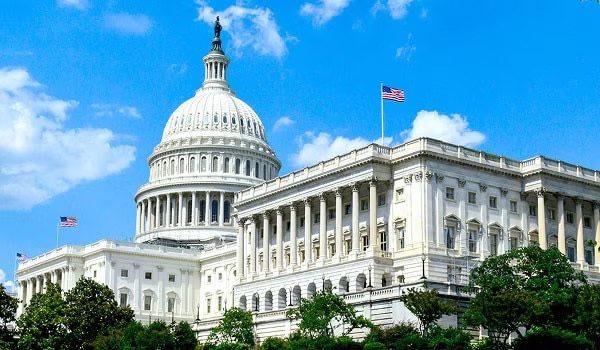
Democrats swept to a resounding victory in the 2026 midterm elections, capturing majorities in both the House of Representatives and the Senate to dramatically reshape the political landscape in Washington for the final two years of Donald Trump's presidency.
Democrats will hold a 56-44 majority in the Senate in 2027. In the House of Representatives, with a few races subject to recount and challenges, and two seats to be determined in December runoff elections, Democrats are projected to end up with a margin of 260 to 175, which would be the largest majority for either party since 1992. A change of this magnitude has significant implications for key policy issues in 2027. Here are six takeaways for registered investment advisors (RIAs).
1. A complicated 2027, led by a debt ceiling fight
Democrats will need to work with President Trump—who has threatened to be "Mr. Veto" and block the Democrats' legislative priorities. But the president also said late on election night that he "looks forward to working with [Democrats] for the good of the country." Navigating between those two perspectives will be congressional Democrats' principal challenge over the next two years.
At the top of the list of issues the president and Democrats will need to work together on is increasing the debt ceiling, the congressionally mandated cap on the total amount of debt the United States can accumulate. That cap was set at about $41.4 trillion last year. With the debt level passing $40 trillion in August, the U.S. is projected to hit the debt limit in early to mid-2027, at which point the Treasury will no longer be able to borrow.
Congress is likely to have to raise the limit by midyear, in a debate that will have enormous political and market impact. Volatility in both the equity and bond markets typically increases the closer Congress gets to the "X date," the date on which the country would potentially default for the first time in history. While the debate will undoubtedly produce a broad national conversation about the size of the annual budget deficit and the federal debt, Congress in recent decades has shown little willingness to engage in the kind of major fiscal changes needed to slow the growth of the country's debt.
2. Taxes and Social Security: debate now, action after 2028
Democrats have been clear that higher taxes on the wealthy are part of their long-term fiscal plan. Among the ideas that have been floated are increasing the top capital gains rate, changing or eliminating the step-up in basis, lowering the exemption amount for the estate tax, or imposing a surtax on income above $1 million. But none of those are likely to happen over the next two years with President Trump in the White House. Instead, expect a lot of discussion about tax policy that sets the table for a possible Democratic "trifecta" in Washington after the 2028 election. We have a long way to go until then, so we can set aside worries about major tax policy changes for now.
Social Security is also expected to be a hot topic in Washington over the next two years. Earlier this year, the trustees of the Social Security trust fund estimated that if Congress does nothing to shore up the program, it will be unable to pay out full benefits in the fourth quarter of 2032. Why did this attract so much attention? Because for the senators who were elected on November 3, it will happen during their terms—and during the next president's term. Expect a lot of discussion and analysis of possible solutions over the next two years, and Social Security reform is likely to be a key issue in the 2028 presidential race. Those discussions will lay the groundwork for what could be a window of opportunity to reform the program in 2029.
3. Democrats focus on cryptocurrency and AI data centers
Democrats are likely to investigate the president's and his family's ties to cryptocurrency. But many Democrats also support legislation to craft a regulatory framework for digital assets that includes investor protections. The two parties negotiated for more than a year over the Clarity Act, which passed the House but collapsed in the Senate in September. Next year, expect Democrats to push for a version of the bill that is much tougher on cryptocurrency companies and includes ethics provisions.
The public backlash against data centers was a significant factor in races across the country, something that has potentially huge implications for AI companies and hyperscalers, the core providers of large-scale, data-intensive computing capacity. Voters have been pushing back against data center construction because of concerns about the environmental impact and the potential for higher utility bills for nearby residents. Democrats on Capitol Hill are likely to push for legislation that slows the data center boom and forces companies to cover the cost of electricity and water infrastructure upgrades–something some Republicans could get behind as well.
4. Regulators' agenda will hold steady, but faces may change
The Congressional elections won't change the agendas of regulatory agencies like the SEC and the Commodity Futures Trading Commission (CFTC). Both agencies have been focused on aggressive deregulation initiatives, and that's likely to continue. So, too, will their efforts to expand investor access to private markets, create regulatory clarity for how brokers and RIAs handle digital assets, usher in an era of tokenized stocks, expand oversight of the prediction markets and quickly approve new products. With the change of power on Capitol Hill, these agencies are likely to increase their pace as they try to make as much progress on these priorities as possible over the remaining two years of the Trump administration.
One important development that may have gotten lost in the election noise was the SEC's November 4 update to the definitions it uses to determine which investment advisors, investment companies, and business development companies qualify as "small entities." The rule raises the threshold for investment advisors from $25 million to $1 billion in regulatory assets under management. The new definitions are intended to ensure that smaller firms' compliance costs are more fully considered in the SEC's rulemaking process. It is the first time in 30 years that the SEC has updated its definition of a "small entity" for investment advisors. The changes will take effect in February 2027. Once the change takes effect, advisors will need to update their Form ADV filings to reflect the new definition.
Finally, a surprise development shortly after the election was the president's nominations to fill vacancies at both the SEC and the CFTC. The president tapped Steven Levine, a Republican who spent several years as a top aide at the SEC and more recently was counsel to the White House Council of Economic Advisers, and Kristen Johnson, a Democrat who served as a CFTC commissioner from 2022 to 2025, to fill two of the three vacancies at the five-member SEC. And he chose two staffers from the Senate Agriculture Committee, Republican Nathan Anonick and Democrat Matthew Rowland, to fill two of the four vacancies at the CFTC. All four nominees are expected to be confirmed by the Senate before the end of the year.
5. Markets tend to rise after elections, whoever wins
Past performance is no guarantee of future results, of course, but markets have historically performed well after the end of a midterm election, regardless of which party came out on top. The S&P 500 has been up six months after every midterm election since 1974, with an average return of 12.4% in those years, according to a Schwab Center for Financial Research analysis.
Elections are inherently uncertain events, and markets generally don't like uncertainty. But once an election is over, markets and advisors can assess, based on the balance of power in Washington, how much political and policy decisions are likely to affect the markets over the next two years. In this case, markets know that there will be two years of divided government, with a Republican in the White House and Democrats controlling both chambers of Congress. That's likely to produce gridlock in the nation's capital. Markets generally don't mind political gridlock because it limits the possibility of sweeping policy decisions that could affect companies, earnings, and the markets.
6. Clients may need help keeping election-related emotions out of their investing decisions
Some of your clients are undoubtedly elated about the election outcome. Others are likely despondent. Over the next few weeks, right through the January transition to a new Congress, it will be critically important to remind clients to keep those emotions out of their investment decisions. History shows that staying invested, regardless of the balance of power in Washington, tends to be the best strategy.
We watch Washington, so you can focus on your clients
With a new Congress taking office in January and a debt ceiling showdown likely by midyear, 2027 is likely to be an eventful year in Washington. Keeping clients focused on their long-term financial plans will remain one of the most important roles that advisors can play. As always, the Schwab team in Washington will continue to provide RIAs with our latest perspective on policy and political developments to help support those conversations.
About the author