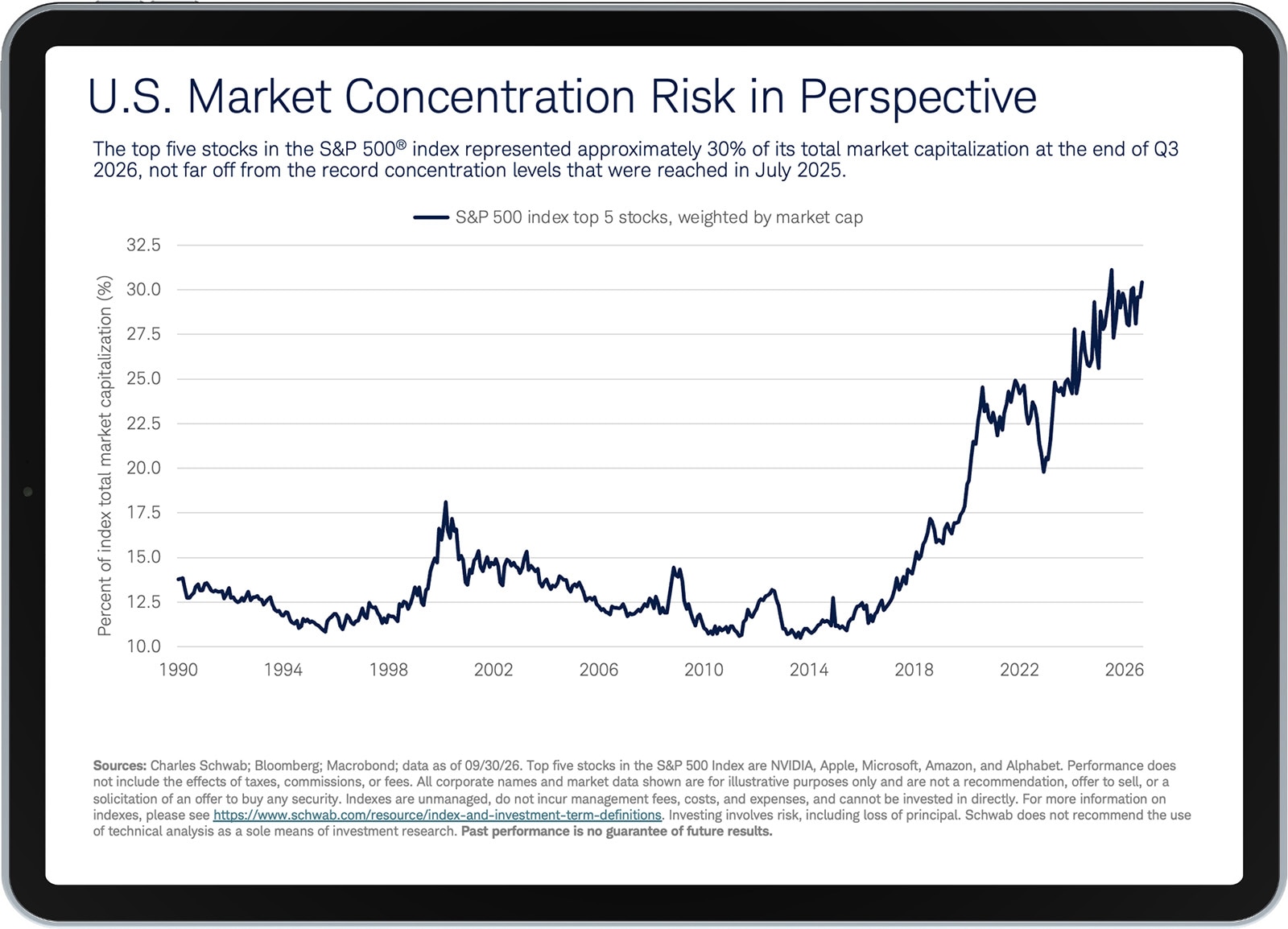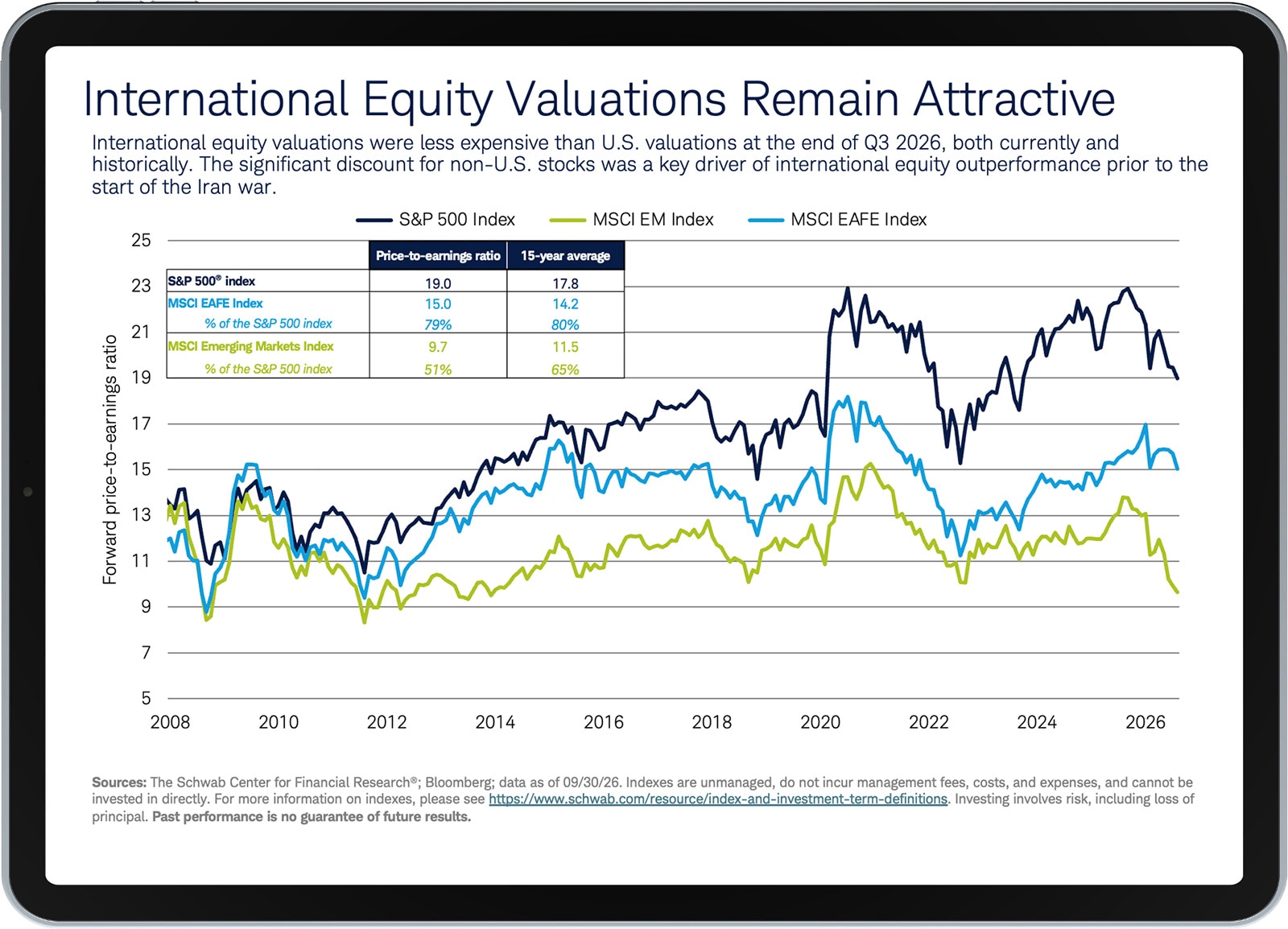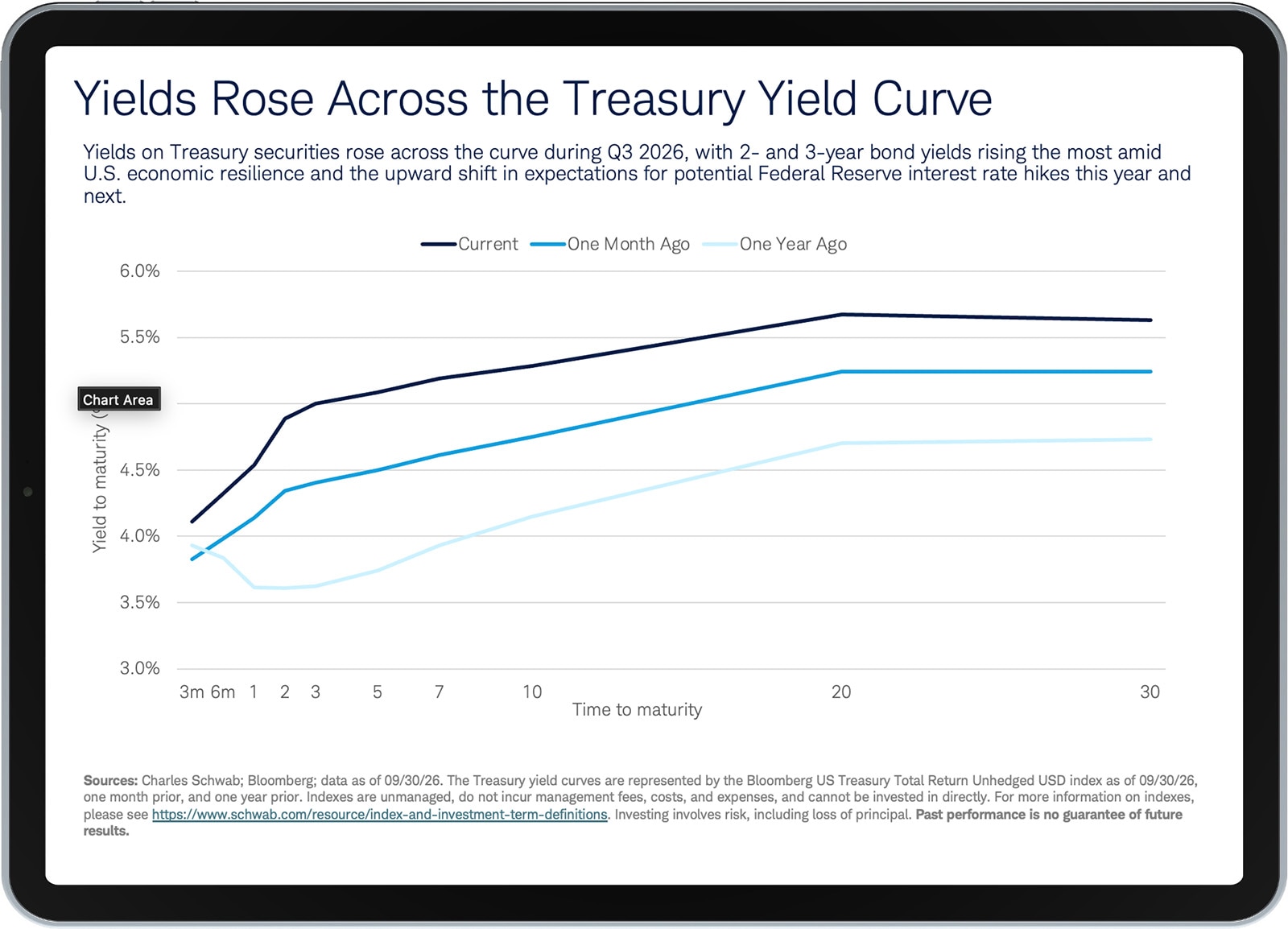
More clarity. Better conversations. One essential resource.

Schwab’s Quarterly Chartbook is your one-stop source for expert visuals, economic trends, and asset-allocation insights.

Illustration of people putting charts under a gigantic microscope

Chartbook Highlights & Portfolio Ideas

A short guide based on our Quarterly Chartbook that provides...

camera icon

Snapshots of the latest trends

talking points icon

Talking points for better client conversations

map route icon

Portfolio positioning ideas for clients

At-a-Glance Summary
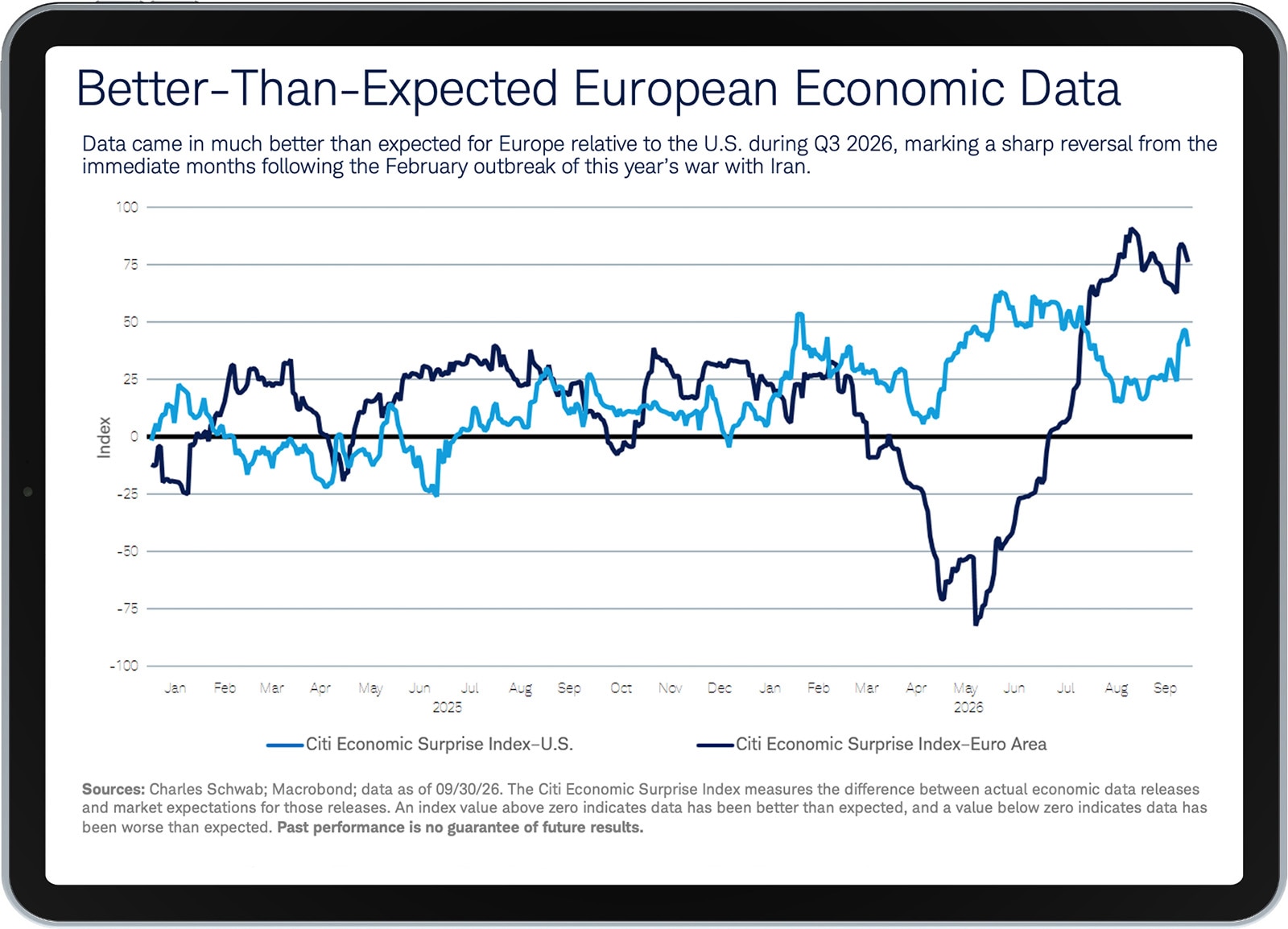
Portfolio Review & Next Steps

Looking to enhance your model frameworks?

Get tailored support to evaluate your models and optimize asset allocation with insights from our portfolio partners.

More Insights

Schwab Market Talk

Schwab experts address advisors’ market and economic questions in this monthly webcast series.

Market Commentary

Timely takes on markets and the economy from Schwab’s Center for Financial Research.

Charts in a Minute

Use these market charts to support your conversations with clients about asset-allocation opportunities.

Investment returns will fluctuate and are subject to market volatility, so that an investor’s shares, when redeemed or sold, may be worth more or less than their original cost. Unlike mutual funds, shares of ETFs are not individually redeemable directly with the ETF. Shares of ETFs are bought and sold at market price, which may be higher or lower than the net asset value (NAV).

Neither Schwab Asset Management® products and strategies nor third-party products and strategies presented for consideration are investment advice or recommendations, but are intended to provide advisors with additional information and tools to use in client discussions. Neither Schwab Asset Management nor Schwab Center for Financial Research®, is responsible for any investment recommendations or advice provided to the client based on his or her own particular situation.

Past performance is no guarantee of future results. The value of investments and the income derived from them can go down as well as up. Future returns and the achievement of stated goals are not guaranteed, and a loss of principal may occur.

International investments involve additional risks, which include differences in financial accounting standards, currency fluctuations, geopolitical risk, foreign taxes and regulations, and the potential for illiquid markets. Investing in emerging markets may accentuate this risk.

Fixed income securities are subject to increased loss of principal during periods of rising interest rates. Fixed income investments are subject to various other risks including changes in credit quality, market valuations, liquidity, prepayments, early redemption, corporate events, tax ramifications and other factors.

Tax-exempt bonds are not necessarily a suitable investment for all persons. Information related to a security's tax-exempt status (federal and in-state) is obtained from third-parties and Charles Schwab Investment Management, Inc., dba Schwab Asset Management does not guarantee its accuracy. Tax-exempt income may be subject to the Alternative Minimum Tax (AMT). Capital appreciation and income from bond funds and discounted bonds may be subject to state or local taxes. Capital gains are not exempt from federal income tax.

Securities issued by companies of different market capitalizations tend to go in and out of favor based on market and economic conditions. During a period when securities of a particular market capitalization fall behind other types of investments, the fund’s performance could be impacted.

Dividend focused funds may underperform funds that do not limit their investment to dividend paying stocks. Stocks held by the fund may reduce or stop paying dividends, affecting the fund’s ability to generate income.

Indexes are unmanaged, do not incur management fees, costs and expenses, and cannot be invested in directly. For more information on indexes, please see https://www.schwab.com/resource/index-and-investment-term-definitions

Diversification strategies do not ensure a profit and do not protect against losses in declining markets.

0726-AGWT