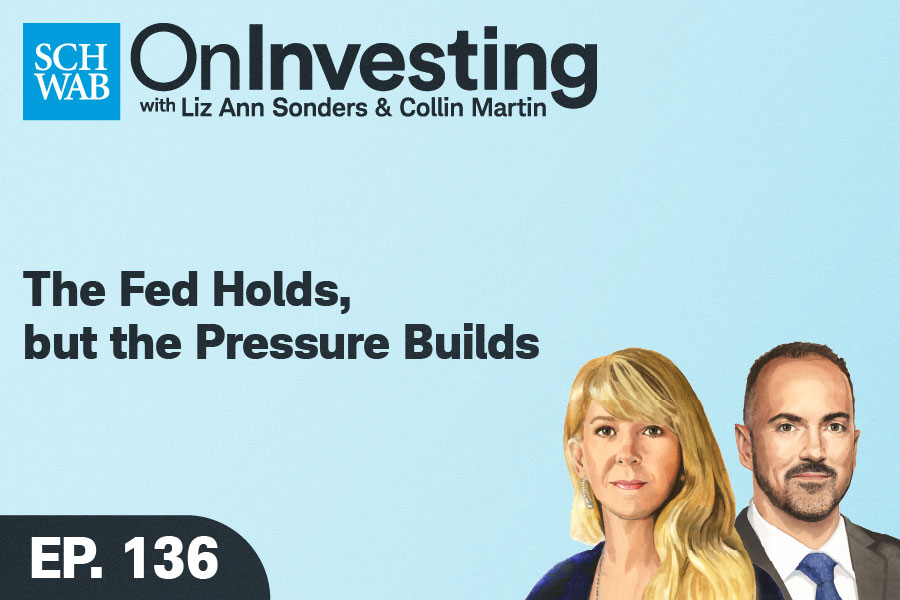
COLLIN MARTIN: I'm Collin Martin.
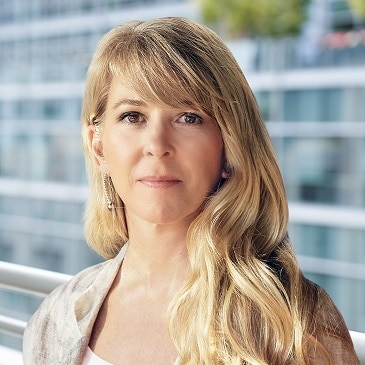
LIZ ANN SONDERS: And I'm Liz Ann Sonders.
COLLIN MARTIN: And this is On Investing, an original podcast from Charles Schwab. Every week we analyze what's happening in the markets and discuss how it might affect your investments.
LIZ ANN SONDERS: So Collin, I'll toss to you first. You and I are both in Boston at Schwab's massive IMPACT conference for the investment advisors on our platform. And it's always incredible amount of information. We're honored typically with being the first keynote session out of the blocks, and we had that yesterday.
And we are now taping this in the somewhat immediate aftermath of the Fed meeting. And we sat on stage yesterday afternoon and talked about the most likely outcome being no move, but there was not a zero percent chance that the Fed might move, but the more likely scenario would be no hike but some dissents.
And we certainly saw that with a couple of dissents. So what are your takeaways as you digest what was just announced?
COLLIN MARTIN: Yeah, I think the dissents were what I focused on first. You know, it was widely expected that there'd be at least one dissent, potentially as many as three dissents, in favor of a hike as opposed to a hold. And like you said, Liz Ann, we were in the camp that the Fed would hold at this meeting, but also you never know. You know, I kind of shrugged because Warsh isn't trying to be tied down by what market expectations suggest. And if he felt the need to hike while the implied probability said otherwise, I don't think that necessarily would have stopped him. But we didn't see that. And we did get two dissents, but there was even a surprise there where Beth Hammack, who has been one of the more hawkish district bank presidents, she dissented, but then Governor Lisa Cook did, which was kind of a surprise. Although, when you listen to her recent comments, she's talked about the concerns around supply-side price increases, you know, mostly from energy seeping into to all inflation indicators. So she's been concerned, but I think the dissent was a little bit of a surprise. And this, we don't need to go down the political …
LIZ ANN SONDERS: And she's never dissented before, right?
COLLIN MARTIN: She's never dissented, but I'm pretty confident the administration will not be happy about this. But I'll leave it at that. We'll let other podcasts talk about that.
But what I think, so knowing that there were a couple others that people thought might dissent but didn't, you know, you have to wonder what happened behind the scenes. You know, what was the discussion back behind at the meeting itself? What did Warsh suggest? And my kind of interpretation is well, if there were people who were considered hawks and they were OK with the hold, maybe they were more confident that the hike will come in December. And maybe they got the idea from people around the table there. But that's speculation. You know, what I got from the statement was a pretty positive outlook on the economy. They described it as strong. The statement said that, you know, the committee just needs an accumulation of more data to help determine the appropriate policy stance. And that's in line with comments we've got from a bunch of Fed officials about the lack of urgency, I guess.
They just want to see more data. But then in Warsh's press conference, he made it clear that inflation's still too high. And he said that financial conditions have tightened but aren't tight. So, you know, that to me is hawkish, or leans to the idea that more hikes are coming, yet short-term Treasury yields fell. And that could be because he also mentioned that inflation expectations remain anchored, and maybe there's this hope that the patient approach here, and if inflation expectations remain anchored and that the Fed might not need to act as aggressively as the markets expect going forward.
There's also some big news, Liz Ann, I want to hear your thoughts on this, about the change in the cadence of meetings where beginning next year, they will … well, they're still going to hold eight meetings, but next year, one of which will be focused on—I'll use my air quotes that that people can't see—but broad monetary policy strategy. So it's not a vote on policy. And then in 2028, there'll be two that are focused on that. But I don't believe there were specific dates given there.
LIZ ANN SONDERS: No, I don't think there was.
COLLIN MARTIN: What are your thoughts on that?
LIZ ANN SONDERS: Well, my first thought when I heard that was, "Why spread it out over two years?" But then maybe the qualifier that maybe alleviated some of those questions being asked by others, obviously I wasn't in the room, was correct me if I'm wrong, but he did reference that just because a meeting next year, or two meetings the following year are not considered policy-setting meetings, that doesn't mean the Fed couldn't do something or announce something at one of those meetings, if something somewhat extreme were to happen, if it if the conditions erupted such that it warranted a decision.
But I thought, why spread it out over a two-year period of time? I don't know whether the market reaction would have been any different or how much we can tie the volatility that we've seen, at least in my side of the world, the equity market, was to that particular statement. You know, it's hard to segment out on a Fed day what comment or set of comments might have moved the market one direction or another, particularly if you get swings in both directions. But I'm not sure why not just have announced that today to start next year.
COLLIN MARTIN: I agree. Why wait? I also noted that point about the potential to have like an intermeeting meeting or an emergency meeting. But that's not a good thing. You know, if we see those, it's usually not for good reasons. It's an emergency. And they obviously … unless it's a true emergency, they don't want to have that. And now it kind of ties their hands a little bit. So I was a little confused at that. And you know, when we look at, you know, what happened after the meeting, so we saw a steeper yield curve where short-term yields, the two-year Treasury declined a little bit. I'm guessing, based on maybe the idea that you know there isn't an urgency here, they can take their time. Warsh talked about inflation expectations remaining anchored. There just didn't seem to be an urgency even with Warsh today, although arguably he didn't really tell us anything.
But then the 10-year Treasury yield was up. And I wonder if that's just because we're not getting much. You know, is that an uncertainty premium seeping in? Where if we're just not sure … I mean that's, so not to get wonky, but we talk about the term premium a lot. But the term premium, one of the definitions is, you know, it's the premium that we as investors earn in a say 10-year, we'll use that tenor for example, we earn that premium in case expectations of short-term rates don't come to fruition. And if we're not getting anything about, you know, what are our expectations? You know, we don't really know which way Kevin Warsh is leaning right now. So maybe you start to see more of a term premium show up in higher long-term yields just because we don't really know what's happening or what to expect over the next few months or quarters.
LIZ ANN SONDERS: You know, the equity reaction was interesting. You had the sell-off on the statement, and then you had a rally in the early part of the press conference, and then you sold off from that, and it's been bouncing all over the place. I think, you know, Warsh made the comment that higher rates are already affecting the AI build-out. And I think that is the, at least in my world, the biggest story at play here is the AI build-out, the sustainability of it, the significantly increased demand for capital, the cost of that capital. I think it was Larry Fink at BlackRock who came out within the last couple of days saying that this scramble for capital is unlike anything that he has seen before.
And I think what we're seeing within the markets and maybe in your world in the credit space, too, but we're starting to really see a discerning eye on who are the high-quality borrowers, who still has access to capital and at what cost, and maybe where some of the kinks are in the armor here. And we certainly see that in the small-cap space within, say, an index like the Russell 2000, where you're seeing a really, really widespread open up between profitable companies and nonprofitable companies, lower debt-to-equity companies significantly outperforming higher debt-to-equity, high-interest coverage stocks or companies, their stocks outperforming low-interest coverage. So I've gotten, particularly at IMPACT, a lot of questions about "Explain Expwhy the market has been so resilient." And my answer has been "It is, but there are some fires in the engine." You just have to lift the hood a little bit to see them. You don't have the smokes, you know, creeping out yet, but you lift up the hood a little bit, and that's where you see more specificity in terms of these macro-type concerns around AI, the build-out, the sustainability of that, capex assumptions, whether revenue generation is going to continue to match those numbers.
What about the election and how big an issue the data centers have become, with really … that's been become an interestingly a bipartisan issue on, you know, "not in my backyard" and what happens to the outlook in the aftermath of the election, particularly if there are more restrictions on the building of data centers, what does that mean for the data-center operators and the revenue generation that is needed for ongoing profitability? I mean, it's such a can of worm of questions these days and an environment where these stories, these narratives, these themes, the half-life has just plunged and it happened so quickly, and it is showing up in subsurface volatility in the equity market. So, what are you seeing on the credit side of things as it relates to sort of quality of borrowers?
COLLIN MARTIN: Yeah, with the credit markets, I think selectivity matters. And so I think we see similar themes there. Although Liz Ann, I like how you just framed it. You talked about a car and popping up the hood and looking, you know, what's under the hood. Yesterday when we were talking about this, you used your duck analogy, you know, what's happening under the surface. So I love that you have multiple analogies that you can pull off the shelf to talk about, you know, looking under the hood, what's going on under the duck. But you know, we're seeing that with the credit markets also. And I think this is a really interesting way to frame it.
So we're recording this, you know, late October. Earlier this week, investment-grade corporate bond issuance hit a new annual high earlier this week. The year's not even over yet. It hit a new high. The previous high was in 2020, after you know the Fed cut rates to zero, and after the Fed had introduced a handful of facilities where they could actually buy corporate bonds and corporate-bond exchange traded funds and the like. And companies essentially, whether they needed debt or not, they just rushed to issue a lot of long-term debt, kind of terming out their maturities at historically low rates. So that makes sense, right? If you have low interest rates, the cost is just very low to you as the borrower.
Now, fast forward to today, and we just hit a new record. And this is an environment where borrowing costs are elevated and spreads are rising. And that matters. Not every company can succeed in that environment. When you're in a zero-interest-rate environment, it lets the weaker companies continue to kind of move along, right? The so-called zombies, the ones that aren't making money. If you're just getting extremely cheap borrowing, you can keep moving ahead.
It's a lot different in the environment we're in right now. So selectivity matters. And I don't expect to stop hearing headlines about concerns in the credit markets. But you can't paint it with a broad brush. Everybody's different. You know, you're going to have some high-quality issuers that might continue to issue a lot of debt, but they have high credit ratings. They might have strong cash flow, strong earnings. But then you're going to move down the credit spectrum and you're going to hear more about, you know, mid-rating, you know, companies, you know, low single As or BBBs, or maybe in the high-yield or junk space sub-investment-grade, but that's kind of closed right now because of concerns from a few weeks ago. So selectivity matters. On the bright side, we think that, you know, big companies, and especially big companies out of tech and out of the data center build-out, corporate fundamentals are pretty strong.
You mentioned interest-coverage ratios. They're pretty strong. Leverage is OK, you know, debt relative to earnings. but there's going to be pockets of stress there. And that shouldn't be surprising. When interest rates rise, it's going to affect the most indebted companies and the ones that have volatile cash flows. So I wouldn't expect the negative headlines to stop, but generally speaking, we think corporate fundamentals are relatively healthy. but selectivity matters. And, you know, make sure you understand what your investment is, if you're in a fund, individual bonds, you know, what do you hold, what's your concentration risk, what's your diversification look like, in case, you know, we do get some negative consequences at some point.
LIZ ANN SONDERS: So Collin, time in our episodes every week where we look ahead. So let me toss to you. What is on your radar for next week?
COLLIN MARTIN: There's a lot on my radar. I'm sure our radar. So I'm going to focus on a few things.
LIZ ANN SONDERS: Yeah, it's a long list.
COLLIN MARTIN: I'm going to leave plenty for you. Don't worry. The main thing, you know, economically speaking, we get a lot of jobs data. So we get obviously the main release on Friday, we get the unemployment rate. I think that's an important one to look at because it's been so steady recently. It was 4.2% in September. If it comes in between 4% and 4.5%, which seems pretty likely, they will mark the 28th straight month that it's held in that tight range. I think that's just a really long streak. And it's that's a number that, while above where we saw a few years ago, is still very low by historical standards. So that's good news.
And then I'll be looking at average hourly earnings. On a year-over-year basis, they're expected to come in at 2.9%. That would mark the first time below 3% since May of 2021. And that'll be good news for the inflation outlook. If we're seeing earnings grow, but grow at a more slow pace, that can, you know, maybe help, you know, limit the price increases we see if it reduces kind of consumer demand.
We also get JOLTS, Job Openings and Labor Turnover Survey, on Tuesday. A few things I focus on are the job openings to unemployed ratio it's right around 1.0, which means, you know, there's job openings for those unemployed, but obviously that doesn't tell the whole story because, you know, yet you could have skills, mismatches, geographic differences, but it shows that the labor market's relatively in balance.
Pivoting kind of to the bond market, I'm going to be paying attention starting this Friday for Fed speeches, because the Fed ends its communications blackout period this Friday, October 30. So the day that this podcast gets published. And you know, we'll be, we'll be paying attention over the next, you know, week plus about each individual participant, whether it's a voter or nonvoter, to see, you know, how they view the policy stance and what they're looking ahead to, mainly because we didn't get much from Fed chair Kevin Warsh.
And then next week on Tuesday, we get the Treasury's quarterly refunding announcement where the Treasury announces you know how their how their financing and funding might change for the upcoming quarter, in terms of, you know, coupon issuance, so longer-term debt relative to bills. It doesn't look like we're going to get much of a change, but it's something that we need to pay attention to, whether we get a change at this coming announcement or down the road, because I think it's something that Treasury Secretary Scott Bessent could be considering. You know, he you know upped his Treasury buyback operation a few months ago, and you know, he seems … I don't know if concerned is the right word, but it seems clear he wants lower rates.
And a way to bring long term yields down is to reduce the supply, because the laws of supply and demand suggest if you reduce the supply and you keep demand constant, that should pull yields lower, but we're not really expecting much of a change there next week. But it's something to pay attention to. If there's a surprise, you can see Treasury yields move accordingly. What about you, Liz Ann? What will you be paying attention to?
LIZ ANN SONDERS: Well we we'll get a third quarter GDP update and so keep an eye on my X feed because I do post an interesting table every time we get a report on GDP that goes into the various components and what weights they have within GDP and then also the growth rates of those individual components.
We also get, at the beginning of next week, the ISM version of the Purchasing Managers Indexes, PMIs. And we get manufacturing first in the beginning of the week and then followed a few days later by the services side. We'll also get S&P Global's version of services PMI. We already had manufacturing last week. So I do keep an eye on both of those because S&P Global, as maybe the name suggests, is a little bit more global and covers more companies. ISM is a little bit more domestic, so it's a nice broad look.
As you mentioned, Collin, we get JOLTS, the Job Opening and Labor Turnover Survey. Always a friendly reminder that JOLTS data lags all of the labor market data by a month. So just keep that in mind if you're going to think about doing apples-to-apples comps to the jobs report that comes out later in the week. But not only do we get JOLTS job openings, but they also will cite the quits rate, so the percentage of people that are quitting their jobs. That usually … the higher numbers suggest that there's confidence in the labor market and the willingness to voluntarily quit your jobs. We also get a layoffs announcement as a component of JOLTS. We also get Challenger Gray's version of layoff announcements, job cuts. So in an environment where we have some concern about a weakening of the labor market, that would be on my radar. And then we get some more cyclical indicators like durable goods and cap goods and in an environment where there's been such a boost in business capital spending, some of those sort of harder data, more cyclically oriented economic ratings are important. So that's what's on my radar.
So that's it for this episode. Thanks as always for listening. We really do appreciate it. And you can keep up with us in real time on social media. I am @LizAnnSonders on X and LinkedIn. Still have a lot of imposters, so please make sure you are following the real me.
COLLIN MARTIN: And I'm @CollinMartinCS on X and LinkedIn. The Collin is with two L's and the CS is for Charles Schwab.
You can find all of our written reports, not just from me and Liz Ann but the rest of our team in the Schwab Center for Financial Research, they include lots of charts, tables, graphs. And you can find those at schwab.com/learn.
And if you haven't already, please consider leaving us a review on Apple Podcasts, a rating on Spotify, or feedback wherever you listen. It really does help us grow the show. So any of that feedback or reviews would be much appreciated. And we will be back with a new episode next week.
For important disclosures, see the show notes, or visit schwab.com/OnInvesting, where you can also find the transcript.